
UK University Application Deadlines for 2027 Entry

Are you planning to study your bachelor’s degree in the UK starting in fall 2027? There are a few important UK university application deadlines you’ll want to know so you can plan ahead and get your application in on time.

For most undergraduate courses, the big date to remember is January 13, 2027 at 6:00 p.m. UK time. This is the UCAS Equal Consideration Deadline.

But that’s not the only deadline!

If you're applying to Oxford or Cambridge, or to most medicine, dentistry or veterinary medicine/science courses, your application is due much earlier. And if you end up applying later in the year, there are also important dates for UCAS Extra and Clearing.

Here at The UK Study Expert, we want to make sure you have the deadlines, timelines and resources you need to plan ahead and stay on track.

Let's look at the full timeline for the September 2027 entry.

2027 UK University Application Deadlines at a Glance

Date What Happens
May 12, 2026 UCAS applications open for 2027 entry
September 1, 2026 Completed applications can be submitted to UCAS
October 15, 2026 at 6:00 p.m. UK time Deadline for Oxford, Cambridge and most medicine, dentistry and veterinary medicine/science courses
January 13, 2027 at 6:00 p.m. UK time Equal Consideration Deadline for most undergraduate courses
February 25, 2027 UCAS Extra opens
June 30, 2027 at 6:00 p.m. UK time Applications received by this deadline are sent to universities and colleges
July 1, 2027 Last day to add a choice through UCAS Extra
July 2, 2027 UCAS Clearing opens
September 23, 2027 at 6:00 p.m. UK time Final deadline for 2027 UCAS applications
October 18, 2027 Last date to add a 2027 Clearing choice

Keep in mind that individual universities and courses can have their own requirements and deadlines, so always check the specific program you're applying to.

What Is UCAS?

We’re going to mention UCAS a lot in this article, so let’s start there!

UCAS, or the Universities and Colleges Admissions Service, is the centralized application system used for undergraduate applications across the UK.

Think of it as the UK's version of the Common App.

For 2027 entry, the UCAS application fee is £34.50, and that single fee allows you to add up to five university and course choices to your application.

One important difference for US students is that you're applying to a specific degree rather than simply applying to the university. Your five choices are therefore university and course choices, rather than necessarily five different universities.

If you're applying to universities in both the US and UK and aren't sure which application system you should use, read our guide to Common App vs UCAS: Which Should US Students Use for UK Universities?

Now let's get into those deadlines!

May 12, 2026: UCAS Applications Open for 2027 Entry

UCAS applications for 2027 entry officially open on May 12, 2026.

This means you can create your UCAS application and begin working through the different sections.

You don't have to have everything completed on May 12! This simply gives you the opportunity to get started.

Use this time to begin working on your application, researching universities and courses, preparing your personal statement responses and making sure you understand the academic requirements for the programs you're considering.

September 1, 2026: You Can Submit Your UCAS Application

Starting September 1, 2026, completed undergraduate applications can officially be submitted to UCAS for 2027 entry.

Remember that completing your part of the application isn't necessarily the end of the process.

Your application needs a reference before it can be sent to UCAS.

If you're applying through your high school, your school may also set its own internal deadline that is earlier than the official UCAS deadline. This gives your counselor time to review your application, complete the reference and make sure everything is ready before it is sent.

So don't wait until the official UCAS deadline to ask your counselor about your school's process!

October 15, 2026: Oxford, Cambridge, Medicine, Dentistry and Veterinary Deadline

This is a big one.

If you're applying to the University of Oxford or the University of Cambridge, or to most courses in medicine, dentistry, veterinary medicine or veterinary science, your application deadline is:

October 15, 2026 at 6:00 p.m. UK time.

That's almost three months earlier than the main January deadline for most undergraduate programs.

If one of these universities or courses is on your list, make sure you're planning for the October deadline from the beginning.

You can add other UCAS choices that have a later deadline afterward, but remember that you can still only have five choices in total.

January 13, 2027: The UCAS Equal Consideration Deadline

For most students applying to UK universities, this is probably the most important deadline of them all.

The UCAS Equal Consideration Deadline for most undergraduate courses is:

January 13, 2027 at 6:00 p.m. UK time.

What does "equal consideration" mean?

Universities and colleges must consider applications received by this deadline equally. In other words, submitting your application earlier doesn't automatically give another student an admissions advantage simply because they applied before you.

If you submit after January 13, universities can still consider your application if they have spaces available, but they are no longer required to give it equal consideration.

Some popular programs may also have fewer or no spaces remaining.

That's why we recommend getting your application in by the January deadline whenever possible.

If you'd like a deeper explanation of how this works, read our guide to the UK Undergraduate Equal Consideration Deadline.

Do US Students Have the Same UCAS Deadlines?

This is a question we hear a lot!

As an international student, you may see some UK universities accepting applications later in the year. That doesn't mean US students should ignore the main UCAS deadlines.

Many universities will continue considering international applications after January 13 if they still have spaces available.

However, once the Equal Consideration Deadline has passed, universities are not required to consider your application in the same way as applications that arrived on time.

If you already know where you'd like to apply, don't assume you can wait simply because you're an international student.

Our recommendation?

Aim for the official UCAS deadline whenever possible.

That gives you the widest range of university and course options and avoids finding out later that a program you wanted has already filled its available spaces.

Getting Ready to Submit Your UCAS Application?

Knowing when your application is due is one thing. Figuring out what goes into the application and making sure everything is completed correctly is another!

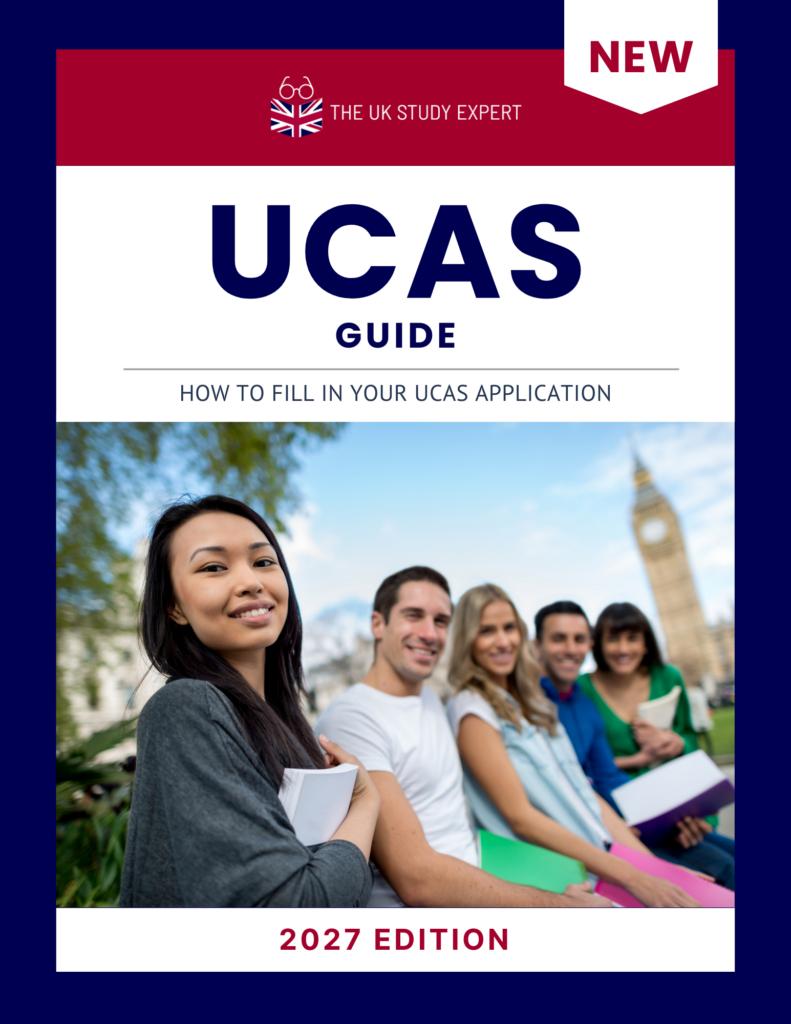
Our 2027 UCAS Guide walks you through the application step by step so you know what to prepare, how to complete each section and what to check before you submit.

Get the 2027 UCAS Guide for $27 →

February 25, 2027: UCAS Extra Opens

What happens if you've used all five UCAS choices and you aren't holding any offers?

You may be able to use UCAS Extra.

Extra opens on February 25, 2027 and gives eligible applicants another opportunity to apply to a university or course.

Instead of adding another group of choices, you apply to one additional choice at a time.

If you don't receive the offer you're hoping for through Extra, you may still have another option later through Clearing.

June 30, 2027: Last Day Before Applications Enter Clearing

Another important date to know is June 30, 2027 at 6:00 p.m. UK time.

Applications received by this deadline are sent to universities and colleges as regular applications.

Applications submitted after June 30 are automatically entered into Clearing.

This doesn't mean June 30 should become your target application date!

If you already know where you want to apply, it's still best to work toward the appropriate October or January deadline for your course.

July 1, 2027: UCAS Extra Closes

July 1, 2027 is the last day to add a choice through UCAS Extra.

If you're eligible for Extra and haven't found a university place by then, Clearing opens the following day and gives you another opportunity to explore courses that still have spaces available.

July 2, 2027: UCAS Clearing Opens

UCAS Clearing opens on July 2, 2027.

Clearing is how UK universities and colleges fill spaces that are still available on their courses.

It can also give eligible students another opportunity to find a university place if they aren't currently holding an offer.

Universities list their available courses through UCAS, and students can search for programs that still have openings.

If you're getting closer to this stage and aren't sure how it works, read our guide to What Is UCAS Clearing and When Should You Consider Applying?

Clearing isn't something you necessarily need to plan on using from the beginning. Think of it as another route that may be available if your original university plans don't work out the way you expected.

September 23, 2027: Final Deadline for 2027 UCAS Applications

The final date to submit a UCAS application for 2027 entry is:

September 23, 2027 at 6:00 p.m. UK time.

This is very late in the admissions cycle, and by this point many courses will already have started filling their places.

So while this is technically the final application deadline, we wouldn't recommend waiting until September if you already know you want to study in the UK.

Your options will generally be much broader earlier in the application cycle.

October 18, 2027: Last Day to Add a Clearing Choice

The final date to add a Clearing choice for 2027 entry is October 18, 2027.

At this point, the 2027 admissions cycle is coming to a close.

Again, most students won't need to wait this long. But it's helpful to know that options may still exist later in the year if your plans change or you haven't secured a university place earlier in the cycle.

One More Thing: Don't Wait Until the Deadline!

We know we've given you a lot of dates. But if there's one thing we want you to remember, it's this:

The deadline should not be the day you plan to finish your application.

Give yourself time to research universities, check your academic entry requirements, complete your personal statement responses and coordinate with your counselor or referee.

This is especially important if you're applying through your high school because your counselor may have an internal deadline that comes before the official UCAS deadline.

The earlier you understand what needs to be done, the easier it is to plan ahead and avoid a last-minute scramble.

Find UK Universities That Fit Your Academic Profile

Now that you know when you need to apply, it's time to figure out where you want to apply!

The UK Study Expert has taken some of the work out of figuring out what individual universities require with our UK University Search Tool.

Use the tool to explore UK universities, compare US entry requirements and start narrowing down the universities that may be a good fit for you.

Just remember to check the specific requirements and application deadline for the degree you're considering before you submit.

Search UK Universities →

What Is Clearing? A Complete Guide | The UK Study Expert

Clearing can be confusing and stressful, but it does not need to be. It is an opportunity for you to still get a place at the university of your choice during the Summer prior to September entry start!


What is Clearing?

Clearing is a system offered by UCAS, which is a UK based organization that helps you to apply for study in the UK. Clearing opens on 5 July 2022, after which point all applications made automatically go into Clearing. There is a myth that clearing only offers courses that no-one wants but that is not true. Lots of highly popular courses are still available. Each university will publish a list of courses available on the website, that will allow you to review each course and decide what you would like to study, then you can contact the university. If you have already made an application through UCAS, please keep your UCAS ID number handy with your academic results and your contact information when speaking to the universities.


The great benefit of this is you can receive guidance on how to apply, support with university information, qualification acceptance and equivalencies. UCAS is there to help you figure out what the next step in your education might be, and to support you when you take that step.


Why Apply through Clearing?

This process can support you if:


  • you already applied through UCAS and have not yet received an offer (or none you wanted to accept)

  • hold a conditional offer but have not met the required grades

  • declined their offers

  • you’re applying after June 30th


How to Apply

As an international applicant wanting to apply to a university in the UK, you will first need to contact the university directly to make sure that the degree is still available before submitting your choice on UCAS. Each university will have a dedicated clearing support team available from the 5th of July to answer all your questions. It’s easier to call them. If calling isn’t an option, you can email your US university manager or officer to assist you through the process. Don’t forget to ask if they have available housing for international students on campus too. After speaking with them, they will work to provide you with a decision on your clearing application as quickly as possible.


Once you have permission from the university, then they will give you instructions on adding the degree to your UCAS application. You will select ‘Add Clearing Choice’ with the course details by the date the university/college gave you on the phone. You can only choose one degree/university and this will count as you accepting their offer. It’s important to do a thorough research of degrees and universities prior to accepting.


So, consider joining a university with rich academic heritage, that is thought provoking and challenges thinking, whilst also been part of a close-knit community.


Below is a link to further information on Clearing for International applicants:


International students and Clearing | Goldsmiths, University of London


My name is Nicola and I’m an International Recruitment Manager for Goldsmiths, University of London. My job is to support students and agents with applying to the University as well as been a supportive member of the International recruitment team. My main area of responsibility is the Americas and I am keen to promote the fantastic reputation of Goldsmiths University of London to potential students.


Conditional vs Unconditional Offers | The UK Study Expert

Navigating your way around UK higher education admissions can be a bit daunting, especially as it is so different from the US way of doing things. You have researched your options, written a wonderful personal statement, and applied, congratulations! Now it is time to be patient whilst you await the responses from your chosen universities.


Below I am going to outline the different types of offers you may get from the UK universities you have applied to. Here in the UK many prospective students are made an offer of study based on their predicted final grades, whether this be the final high school grades and test scores, if applying for undergraduate, or the final cumulative GPA if applying for postgraduate. The offers set out below reflect this:


  • Conditional Offer – This offer means you have a place reserved for you as long as you meet certain requirements, usually the conditions of your offer so your final exam results or your final transcript. Universities don’t need to see the evidence of your final qualification right away (unless you have applied very late). They will set a deadline for you to provide your final documents to then confirm your place.
  • Unconditional Offer – This means you have successfully been given a place at this university and have met all the academic requirements we need for entry. Please bear in mind you may still need to sort your visa and other documentation before traveling to the UK and being able to commence your studies.
  • Unsuccessful – This means that the university is unable to make you an offer, this usually happens if your predicted final grades are not high enough to match the universities offer.


Once you have heard back from all the universities you will then need to make a decision as to what pathway you are going to take. If you are applying for undergraduate and have applied through UCAS you will need to choose one university as your firm choice and a second as your insurance choice. Remember to take your time over this and choose the course that appeals to you the most and will help you achieve your future goals.


Things to remember:


  • Deadlines – whether this be the UCAS decision deadline date, or the decision date set by universities be aware of them! Put them into a spreadsheet so you can keep track and respond to any offers before they expire.
  • Be aware, those applying for undergraduate, some universities may entice you by promising an unconditional offer if you make them your firm choice. Try not to be influenced by this. Choose the university based on the course that is the most appealing to you and your future goals.
  • Deposit – once you have your offer that you want to accept you may be required to pay a deposit to confirm. Make sure you are aware of this and pay the deposit before the deadline.
  • Speak to your family and friends before choosing where to study, their insight could prove to be very valuable.


Good luck with your applications, remember to do your research and apply with plenty of time.


Katie Sharpe is Senior International Student Recruitment Manager (North America) at the University of Surrey.  Located 35 minutes south of London in the town of Guildford, the University of Surrey has been awarded the prestigious accolade of ‘University of the Year for Graduate Employment’ in the Times/Sunday Times Good University Guide for 2022 recognising the University’s consistently high performance in the employability of its graduates.


How The UK Study Expert Can Help You

Looking to find your best match UK university? Lucky for you, the UK Study Expert has taken the guesswork out of figuring out what each university requires with our handy dandy search tool. Or you can find your best university by taking our free UK University Quiz Match.


Need to speak to an advisor about studying in the UK? Check our Services webpage to see what the best available options are for your needs. 


UK Application Timeline & Deadlines | The UK Study Expert

The UK application timeline can be similar but very different compared to the US. The UK does not have Early Action or Early Decision. Instead, UK universities have set deadlines depending on the university and courses. To better prepare you in your application journey, below are the timelines and deadlines when applying to UK universities for your bachelor’s degree!

→ Need help with your UCAS application? Get our UCAS Guide for $27


Deadlines

The UCAS Application is the centralized application system for all UK universities for undergraduate courses.


Applications for Oxbridge or Medicine/Veterinary/Dentistry courses must be submitted by 15 October.


For the majority of all other courses and universities, applications should be submitted to UCAS between:

  • September to January (final deadline varies each year) to be guaranteed equal consideration with other applicants.

    Disclaimer: Many top ranked universities will require this as their final application deadline. Please check the university’s application page.

    For 2025 entry, the equal consideration deadline is January 29th.

  • End of January (equal consideration deadline) to 30 June – the majority of universities will offer rolling admissions for international students. Students can still apply until 30 June, but places on courses may vary.

  • After 30 June – Students can use Clearing (more information on this below).


Admissions Test

Most universities do not require an additional admissions test, but the universities that do require it are the competitive universities (Oxbridge) or competitive courses (Business, Medicine, Law, etc.). Universities will list on their course page, admissions page, or on our university page if you will need to take an additional exam and their procedure. Or you can also check the UCAS admissions test page on the UCAS website.


University Decisions

Each university and college will make their decisions at different times depending when you have applied. Once you have applied, they have to make a decision on a student’s application:

  • If you send your application by the January deadline, you will hear back from the Universities before or by May. The usual response time for universities to respond back to an application is 2-6 weeks.

  • If you send your application by the June deadline, you will hear back by July.


Replying to Offers

Once you receive all of your offers, you will have deadlines to respond by. Don’t worry – these deadlines will be presented on your UCAS portal and you will be notified. These are varied deadlines based on when you get the last decision from your university or college:

  • If you receive your last decision on or before the May deadline, your reply date is typically in June.

  • If you receive your last decision on or before the July deadline, your reply date is typically at the end of July.

The actual dates and deadlines will be listed on your UCAS Application Portal. It’s important to check and make a note in your calendar so you don’t forget.

Clearing

All applications received after 30 June are entered into Clearing. Clearing is how universities and colleges fill any places they still have on their courses.

From July – October, you can apply for a course using Clearing if you’re not already holding an offer from a university or college, and the course still has places.

If you have questions about deadlines or the processes and wish to speak to a UK university representative who assists with US students, you can contact a representative directly on our university webpages. Click the “contact university” on the red button on the university page and your message will be sent directly to them.


Toni Dolby is the International Recruitment Manager for the Americas at the University of Sheffield. The University of Sheffield is a World Top 100 University located in the heart of the UK offering undergraduate and graduate study. The University is truly international as we are home to over 29,000 from 150 countries and have been voted one of the top 50 most international universities in the world!


Need help figuring out your UCAS application? Check out our step-by-step UCAS Guide!

UK Week in the US hosted by the British Council


BritishCouncil_Logo_Indigo_RGB.jpg

 Starting the week of February 1st, the British Council will be hosting UK Education Week in the USA.


The UK Week is integrated of a series of bite-sized videos that have been designed exclusively for US undergraduate and graduate students. By gaining access to this video playlist, you can watch on demand and hear directly from a range of universities from Scotland, Wales, England and Northern Ireland. Students, parents and counselors can learn from a variety of topics about studying in the UK from ‘Study engineering in the UK’ to ‘Moving to the UK: Tips and Hacks’. A range of universities will be presenting, including:


University of Strathclyde

University of Westminster

Queen’s University Belfast

Leeds Arts University

Falmouth University

University of Lincoln

Trinity Laban Conservatoire of Music and Dance

Liverpool Hope University

University of Birmingham

University of Manchester

Solent University, Southampton Solent University

University of Birmingham

Aberystwyth University

University of Wales Trinity Saint David

Norwich University of Arts

Swansea University

University of South Wales

The British Council is a British organization founded by the British government specializing in international cultural and educational opportunities. The organization builds connections, understanding and trust between people in the UK and other countries through arts and culture, education and the English language.