
Common App vs UCAS: Which Should US Students Use for UK Universities?


If you’re applying to universities in both the US and UK, you may find yourself deciding between two different application systems: Common App and UCAS.


Both can be used to apply to certain UK universities, but they weren’t designed for the same purpose. Common App is primarily used for college applications in the US, while UCAS is the centralized application system used across UK higher education.


So, if a UK university appears on Common App, should you apply there? Or should you use UCAS instead?


The best choice depends on how many UK universities you’re considering, whether the UK is a serious part of your university search, and which institutions are on your list.


Here’s what US students need to know.

Common App vs UCAS at a Glance

Common AppUCAS
Primarily designed forUS and international college applicationsUK higher education applications
UK university availabilitySelected participating UK universitiesBroad access to UK undergraduate universities
Number of choicesUp to 20 colleges overallUp to 5 university/course choices
Application feeIndividual colleges may charge their own application fees£34.50 for the 2027 cycle
Application writingCommon App structure; requirements vary by universityThree structured personal statement questions
Best fit forStudents primarily applying in the US with a small number of participating UK universitiesStudents seriously considering several UK universities
RequirementsVary by institutionVary by university and course

What Is UCAS?

UCAS is the centralized application system used to apply to undergraduate universities and courses across the UK.


For the
2027 admissions cycle, students can add up to five university or course choices to one UCAS application for a £34.50 application fee.


Unlike the US admissions process, you aren’t applying generally to a university and choosing your major later. In the UK, you typically apply directly to the specific degree you want to study.


That means your five UCAS choices could include five different universities offering the same or similar subject, or different courses within the options allowed by UCAS.


UCAS is designed specifically around the UK admissions system, so if you’re seriously considering studying in the UK, it will usually give you access to the widest range of university options.

What Is Common App?

Common App is a centralized application platform widely used by colleges and universities in the United States.


Students can add up to 20 colleges to their Common App account, although individual universities may have their own application fees and additional requirements.


Common App also includes universities outside the US, including a number of UK institutions.


For an American student who is already applying to US colleges, seeing a UK university appear in Common App can make applying overseas feel much simpler. You may be able to add that university without starting an entirely separate application process.


But convenience isn’t the only thing you should consider.

Can You Apply to UK Universities Through Common App?

Yes. A number of UK universities accept applications from US or international students through Common App.


For example, Common App currently lists universities including the University of Glasgow, University of St Andrews, University of Aberdeen, University of Dundee and University of Stirling among its participating UK institutions.


However,
not every UK university participates in Common App, and participation can change from one admissions cycle to another.


If you’re considering several universities in the UK, don’t build your entire UK list around the universities you happen to see on Common App.


Start by identifying the universities and courses that best fit your academic profile and goals. Then look at which application routes those universities accept.

Common App UK Universities

A number of UK universities have offered applications through Common App, including:


Important:
Common App participation can change. Always confirm that the university and course you’re interested in currently accept Common App applications before applying.


Where possible, you can also use The UK Study Expert’s
university profiles to research US entry requirements and learn more about individual universities before building your final list.

Should You Use Common App or UCAS for UK Universities?

There isn’t one answer that works for every student.


Instead, think about where UK universities fit into your overall application strategy.


If You’re Primarily Applying to US Universities

If most of your university list is in the United States and you’re considering only one or two UK universities that participate in Common App, using Common App may make sense.


You’re already completing the platform for your US applications, and keeping those applications together can make the process easier to manage.


Before applying, however, confirm that your UK university accepts Common App applications for your specific situation and review any university-specific requirements.

If You’re Seriously Considering Several UK Universities

If studying in the UK is a serious option and you’re considering several British universities, UCAS will usually make more sense.


UCAS gives you much broader access to UK undergraduate universities and courses, rather than limiting your choices to the smaller number of UK institutions participating in Common App.


It also keeps your UK applications together within the system specifically designed for the UK admissions process.

If the UK University You Want Isn’t on Common App

Then Common App won’t solve the problem.


You may need to apply through UCAS or, where available, directly to the university.


If you’re wondering how UCAS compares with applying directly to a UK university, read our guide to
UCAS vs UK University Applications.

How Common App and UCAS Applications Differ

The number of universities you can apply to isn’t the only difference between the two platforms.


Number of University Choices

Common App: Students can add up to 20 colleges overall.

UCAS: Undergraduate applicants can add up to five choices.


Remember that a UCAS “choice” is connected to a specific university and course. Because UK students apply directly to their degree subject, your course selection is an important part of building your UCAS list.

Application Fees

With Common App, individual colleges may charge their own application fees, although some universities have no application fee.


For the
2027 UCAS cycle, the application fee is £34.50, which allows undergraduate students to add up to five choices.

Personal Statement and Application Writing

This is another area where the two application systems work differently.


Common App requirements vary by university. Some colleges require the Common App personal essay, while others do not, and individual institutions may have their own questions or additional requirements.


UCAS now uses
three structured personal statement questions rather than the single long-form personal statement used in previous application cycles:

  1. Why do you want to study this course or subject?
  2. How have your qualifications and studies helped you prepare for this course or subject?
  3. What else have you done to prepare outside of education, and why are these experiences useful?


The overall UCAS personal statement limit remains 4,000 characters across the three responses.


Because your UCAS application is sent to all of your choices, your responses should focus primarily on the
subject you want to study, rather than writing separate essays about why you want to attend each individual university.

University-Specific Requirements

Don’t assume that applying to a UK university through Common App means you’ll have exactly the same requirements you see with your US colleges.


Requirements vary.


For example, some UK universities on Common App don’t require the standard Common App personal essay.


Always review the individual university’s requirements before submitting your application.

Planning to Apply Through UCAS?

If UCAS looks like the better fit for your UK university plans, our 2027 UCAS Guide walks you through the application step by step, from setting up your application to understanding what belongs in each section and what to check before you submit.

Get the 2027 UCAS Guide for $27 →

Can You Apply to UK Universities Through Both Common App and UCAS?

Students sometimes find themselves using both Common App and UCAS, especially when applying to universities in both the US and UK.


That doesn’t necessarily mean you’ve done anything wrong. You may use Common App for your US universities and UCAS for most of your UK choices.


Where you need to be careful is
submitting applications to the same UK university through multiple systems.


Individual universities can have their own policies for how they handle Common App and UCAS applications.


Ashley Warmington, Senior International Officer from the
University of Glasgow, previously explained how Glasgow handles the process behind the scenes:


“Behind the scenes, every Common App turns into a UCAS application during processing. If a student applies and accepts their offer on the Common App, the admissions team will transfer their information to UCAS. If they find that their UCAS is already full with universities, it becomes an issue.”


That insight is still important today.


The University of Glasgow’s current guidance specifically tells students
not to submit a Common App application to Glasgow if they already have a live UCAS application, even if Glasgow isn’t one of their UCAS choices.


Glasgow explains that doing so can cause delays with student records, immigration documentation, accommodation access and enrollment.


Other universities may handle applications differently, which is why you shouldn’t assume the same rule applies everywhere.


Before applying to the same UK university through more than one application system, check that university’s current policy or ask its admissions team.

What If You’ve Already Applied Through Both Common App and UCAS?

Don’t panic, but don’t submit additional applications or make decisions about your offers without understanding how the university handles the two systems.


Start by looking at the admissions guidance for the UK university involved.


If the answer isn’t clear, contact the university’s admissions team and explain:

  • That you’ve submitted applications through both systems
  • Which universities you’ve selected through UCAS
  • Whether you’ve received or accepted any offers
  • Which application you’d like to move forward with


The university can tell you what, if anything, you need to do next.


This is much better than assuming the Common App and UCAS applications will sort themselves out behind the scenes.

UK University Entry Requirements

Choosing the right application platform is only part of the process.


You’ll also need to make sure you’re academically eligible for the UK universities and courses on your list.


UK universities evaluate US qualifications differently. Depending on the university and course, entry requirements may consider:

  • Your high school GPA
  • AP exams
  • SAT or ACT scores where applicable
  • College-level coursework
  • Subject-specific prerequisites
  • Other academic qualifications


You can use our
Undergraduate University Search Tool to explore UK universities and see their US undergraduate entry requirements.

Search UK Universities →

So, Should You Use Common App or UCAS?

Here’s the simplest way to think about it.


Common App may make sense if:

  • You’re primarily applying to universities in the US
  • You’re considering only one or two UK universities
  • Those universities currently accept Common App applications
  • You want to manage most of your applications within one platform


UCAS may make more sense if:

  • Studying in the UK is a serious goal
  • You’re considering several UK universities
  • Some of your preferred universities aren’t on Common App
  • You want access to the broader UK university system
  • You’re building a focused UK application strategy around your course and academic profile


And remember: you don’t need to choose your university based on which application platform is easiest.


Choose the universities and courses that fit you first. Then determine the best way to apply.

Want Help Building the Right UK Application Strategy?

Choosing between Common App and UCAS is only one part of applying to university in the UK.


Your academic profile, university choices, course requirements, UCAS responses, reference and application details all need to work together.


With the
UK Study Accelerator, you get expert support as you build and strengthen your UK university application. We can help you identify the universities that fit your profile, refine your application strategy and review your UCAS application before you submit.


Explore the UK Study Accelerator →

Amazon Prime Day 2024: UK Student Deal | The UK Study Expert

Amazon Prime Day is here, and it’s the perfect opportunity for students preparing to study in the UK to grab essential items at fantastic discounts. Whether you need electronics, or travel essentials, Prime Day has you covered.


Electronics, travel essentials, and clothing are best bought before students move to the UK to ensure preparedness, compatibility, and comfort. On the other hand, larger items like dorm essentials and bedding are more practical to buy locally. The UK offers a wide range of stationery with more options and often at lower prices compared to the US. Additionally, it’s uncommon for students to buy appliances, as most dorms or flats are equipped with the necessary kitchen facilities. This will save you from the hassle and expense of shipping bulky items and saving you money. By planning ahead and making smart purchasing decisions, you can ensure a smoother, more enjoyable experience as you embark on your studies in the UK.

Let’s explore some top deals that will help make your transition to student life in the UK smooth and stress-free.

Women’s Waterproof Raincoat

26% off
Deal Price: $36.79

Men’s Waterproof Packable Raincoat

39% off
Deal Price: $26.39

Samsonite 2-Piece Luggage Set

55% off
Deal Price: $185.56

Apple 2024 MacBook Air 13”

18% off
Deal Price: $898.99

Hunter’s Women Short Rain Boot

30% off
Deal Price: $118.75

Hunter’s Women Short Rain Boot

30% off
Deal Price: $129.50

Sperry Men’s Rain Boot

50% off
Deal Price: $49.98

Worldwide Hair Dryer

5% off
Deal Price: $34.99

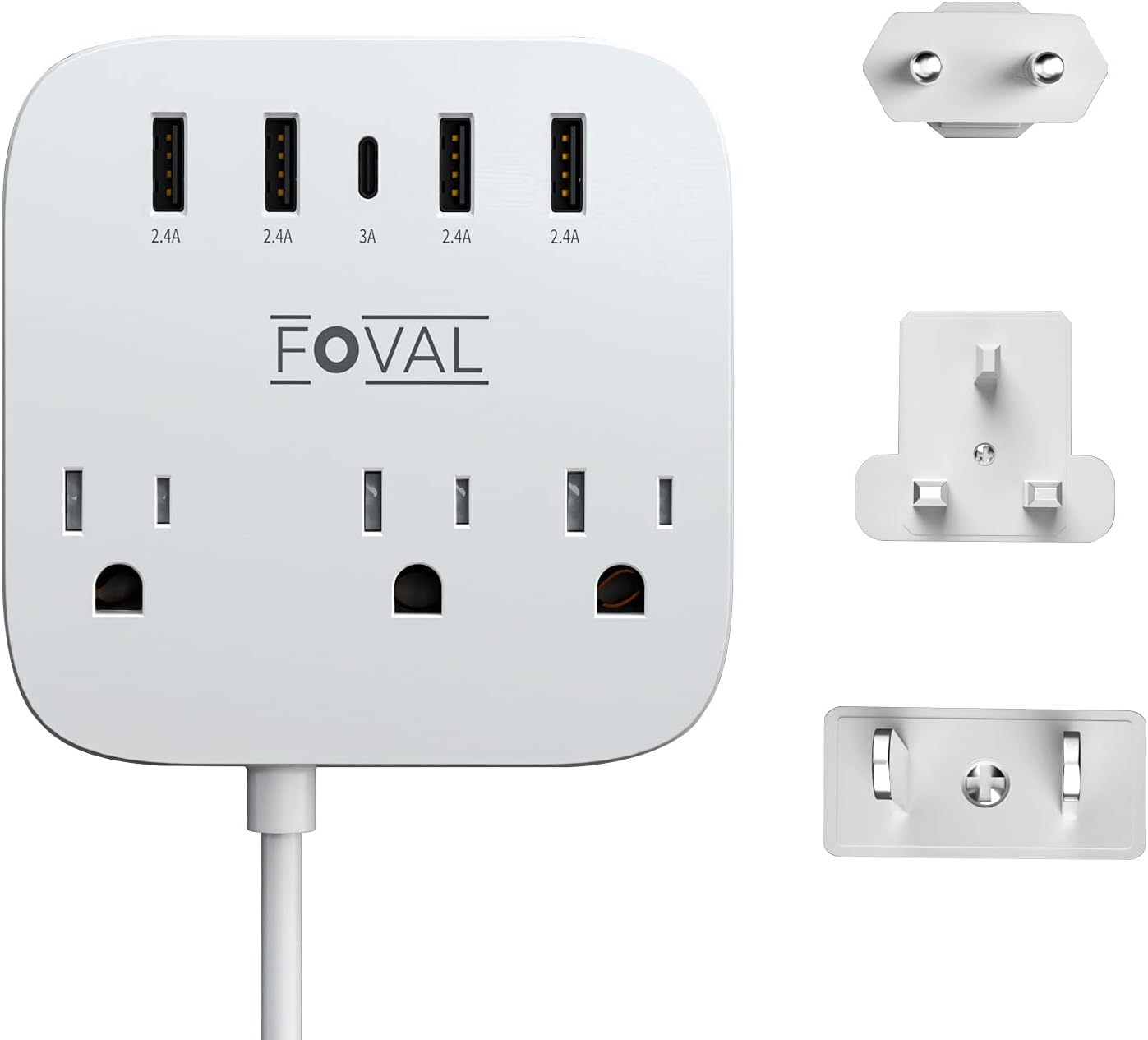
International Travel Power Cord Adapter

19% off
Deal Price: $20.98

BOSE Sound Portable Speaker

34% off
Deal Price: $99.00

Travel Luggage Vacuum Bags

29% off
Deal Price: $23.99

8 Silicone Bottle Covers

21% off
Deal Price: $7.89

Large makeup Bag w/ LED Mirror

15% off
Deal Price: $22.93

JLab Go Air Sport Headphones

33% off
Deal Price: $19.99

Spacesaver's Vacuum Storage Bag

32% off
Deal Price: $30.68

BAGSMART Toiletry Bag Hanging Organizer

11% off
Deal Price: $24.98

Fireproof Document Bag

17% off
Deal Price: $28.99

Travel Passport Wallet Holder

13% off + %5 off coupon
Deal Price: $13.99

Travel Size Jewelry Box

47% off
Deal Price: $9.49

Neck Pillow for Traveling

28% off
Deal Price: $15.86

Not on sale, but worth getting:

If you are looking for Dorm Essentials (Bedding, kitchenware) or Study Supplies (Stationery, planners, and backpacks), we recommend getting them in the UK since they have different bed sizes, are less bulky to buy than shipping it, or are cheaper and easier to get. 

Dual Offers Dilemma: US vs UK Choice | The UK Study Expert


As a US student faced with the dilemma of accepting an offer from a US university for May 1 or meeting the conditional offer from a UK university in June, careful consideration and planning are crucial. Here are some professional suggestions on how to navigate this situation and make an informed decision.


  1. Consider Accepting the US Offer: Given the May 1 deadline commonly set by US universities, it may be wise to accept the US offer and secure a spot. This allows for certainty in the short term, while also providing the opportunity to explore options with the UK offer.

  2. Evaluate the Conditional Offer: US students should carefully review the conditions attached to the UK offer. Assess the likelihood of meeting these conditions, such as achieving specific grades or fulfilling other requirements, by the stipulated deadline in June. You may be able to ask your UK university if this is a hard conditional requirement. If you are just short of meeting the requirement, the US recruitment officer may be able to speak on your behalf to admissions. If you don’t meet their requirements, you can also rely on your insurance university choice as a back-up or the university may be able to provide another option, such as a Foundation Year.

  3. Explore Deferral Options: If feeling torn between the two offers, US students may want to consider deferring one of them. Some US and UK universities may offer deferral options, allowing students to postpone their admission for a year. This can provide additional time to make an informed decision and meet the conditions of the UK offer.

  4. Communicate with Universities: It’s important to keep communication lines open with both US and UK universities. Inform them about your decision, inquire about deferral options, and seek clarifications on any queries or concerns you may have. Professional and timely communication can help navigate the process smoothly.

  5. Evaluate Priorities and Goals: Reflect on your priorities and long-term goals. Consider factors such as academic programs, university reputation, location, career opportunities, and cost of education. Carefully weigh the pros and cons of studying in the US versus the UK, and how each aligns with your personal and professional aspirations.

  6. Consider Financial Implications: Evaluate the financial aspects of both offers, including tuition fees, living expenses, and available financial aid options. Factor in potential currency exchange rates and cost of living in the UK. Develop a budget and assess the financial impact of each option.


In conclusion, US students facing the decision of accepting offers from both US and UK universities should approach it strategically. By carefully considering the conditional offer, exploring deferral options, communicating with universities, and evaluating priorities and financial implications, students can make an informed decision that aligns with their academic and career goals.


How The UK Study Expert Search Tool and Quiz Can Help You


Lucky for you, the UK Study Expert has taken the guesswork out of figuring out what each university requires with our handy dandy search tool. Or you can find your best university by taking our free UK University Quiz Match.


Need to speak to an advisor about studying in the UK? Check our Services webpage to see what the best available options are for your needs. 


Applying to UK Medical Degrees

What are the entry requirements to apply to medical school? How competitive is it for me as an American to apply? Will my UK medical degree transfer back to the US? What are some viable options if I can’t get into Medical School in the UK?

We address these questions and more as we help you understand what it means to study Medicine in the UK!


UK Medical Degrees 

In the UK, it’s hard to believe, but British students can go directly into Medicine as an undergraduate. This often leads to a misconception in the US that the process will be quicker, cheaper, and perhaps easier to study a medical degree abroad. However, that is not accurate.

Medical programs are called the Bachelor of Medicine, Bachelor of Surgery (MBChB or MBBS). They have no general education or core curriculum requirements and are five years in length. This program is considered a combined Undergraduate and Graduate degree. The first two years are foundational and years 3-5 are hospital experience.

Students who complete the Medicine (MBChB or MBBS) program, must then complete an additional two years of professional training to practice in the UK. Therefore the length to start practicing is around 7 years.


Entry Requirements as an American

Medicine is one of the most competitive programs in the UK. Out of 130 universities, there are only 37 medical schools. The average UK student who is accepted into a Medical degree already has a strong knowledge and understanding of Math, English and Sciences with at least 3 to 5 A-Levels or Highers exams with scores of A’s. The equivalent of these exams in the US are AP exams with scores of 5’s.

In addition, most universities will also require you to take one admissions test: University Clinical Test (UCAT), Biomedical Admissions Test (BMAT) or Graduate Medical School Admissions Test (GAMSAT) along with an interview.

Not only are the entry requirements quite high, but looking at it from an international standpoint, it becomes more competitive. Most universities accept only 10-15 international students per year. You’re not only competing against other Americans, but you’re also competing against other students from around the world.

The application deadline for all medical programs is October 15th.


Transferring your UK Medical Degree to the US

If a student wants to return to the US after graduating, there are going to be some extra steps. UK graduates with the MBChB or MBBS are generally exempt from having to attend medical school in the United States, but may need to complete a residency, in addition to passing the United States Medical Licensing Examination (USMLE) to become a licensed doctor.

Either way, the process will be rigorous. It will take about 7-8 years to complete no matter which route you choose. So the decision should be less about saving time and more about what experience is going to be the best fit for you.


Other Medicine Pathways

If a student is looking to get the best of both worlds, a great option might be to complete a Bachelor of Science in the UK and apply to a medical school in the US.

The UK is a fantastic option for the student who knows what they want to study, as there are no general education or core curriculum requirements. You have the chance to study your major and related subjects from day one. Not to mention the transparent application process and reasonable tuition fees. One thing to keep in mind is that US medical schools could require specific general education courses. It’s important to do your research and check before applying.

If a full degree abroad isn’t the preference but a student has medical aspirations, studying abroad for a semester or a year might be a good choice. TheUniversity of Glasgow has a study abroad course called ‘Functional Anatomy’ that is exclusively available to visiting students. This was designed specifically for pre-med study abroad students by a professor who used to teach at a medical school in the U.S.

Once you research the process to find out if studying medicine overseas is truly what you want to pursue, you will have the fun task of finding the right schools to apply to. Some of the best medical schools in the world are in the United Kingdom.


Our University Partners and their Medical Schools 

If you are interested in pursuing your full medical degree in the UK, below is a list of our university partners who offer Medicine. If you would like to connect with a university representative to learn more about their entry requirements and applying, we recommend filling in their university contact form. A university representative will contact you within 2-5 business days.

University of Glasgow

Leeds Beckett University

King’s College London

The University of Sheffield

University of Sussex

University of Bristol

University of Kent

University of Birmingham

University of Plymouth

Imperial College London

Newcastle University

University of Manchester


Ashley Warmington is the Senior International Officer for western USA at the University of Glasgow. Ashley studied her undergraduate degree in Scotland and has worked in UK admissions since 2016. She is now based in Southern California, where she helps American students through the UK application process.


Predicted Grades and UCAS Application | The UK Study Expert

Yay, you’ve completed your UCAS Application! The next step will require your counselor or teacher to supply predicted grades for you IB, AP, or other exams. You may be wondering: What is the best way to approach this? Will submitting the wrong grade hinder your chance of acceptance? We asked Ashley Warmington from University of Glasgow to help us understand this process.


Before we begin, it’s important to understand a major differences between US and UK secondary education. In high school, which is called ‘college’ in the UK, there are no GPAs or transcripts. Instead, students work towards exams called A-levels or Higher’s (Scotland) taken in May or June at the completion of their course. Students use scores they receive on quarterly practice tests to estimate the grade they will receive on their final exam. This is the predicted grade.


Often US teachers or counselors do not know how to calculate a predicted grade and are afraid they may be held accountable if they guess incorrectly. This is not the case. When approaching the predicted grade, think of it as the University asking you if the student is likely to meet the academic requirements. Using the mid-year transcript or a first semester progress report is a great way to estimate a final grade. We recommend that the teacher try and answer as honestly as possible based on the student’s previous coursework, but also keep in mind what the university’s minimum entry requirements are.


With all this in mind, we can see why the UK admissions process is historically test-focused. US applicants either appreciate the transparency (get the grades and you’re in, fall below and you aren’t) or fear it. It isn’t a perfect system, but one of the silver linings of the pandemic has been more and more UK institutions offering a flexible and holistic review process for US applications.


I hope that clarifying the UK grading/testing system helps you to understand the UK application/admissions process a bit better. As always, we recommend reaching out to a UK university representative if you are unsure. You can always find helpful articles on our website, The UK Study Expert or UCAS.


Ashley Warmington is the Senior International Officer for western USA at the University of Glasgow. Ashley studied her undergraduate degree in Scotland and has worked in UK admissions since 2016. She is now based in Southern California, where she helps American students through the UK application process.


Should You Consider a Foundation Year?

Foundation years are something that are often overlooked in the UK university system, but provide benefits to certain students. There are typically two different types of foundation years in the UK.


The first is aimed at those who need some assistance with English before undertaking a full degree. This is called international foundation. We wouldn’t recommend this to US students since their first language is English. The second is a different type of foundation year, that students might take for a number of different reasons, and it is this one that would be most relevant to students from the US.


Foundation year is a preparatory pathway taken prior to starting a three-year degree in England, Wales and Northern Ireland. They are in broad subject areas, which will allow you to progress into a more specialized area. For example, at University of Sussex, our foundation year in Business, Management and Economics will allow students to progress into any of our 3-year degrees in the University of Sussex Business School.


So why take a foundation year?

A foundation year can be taken for a number of different reasons. As you start to research English universities, you’ll see that undergraduate degrees are in specialized areas (and start in the subject from day 1; we don’t have general education classes in our system!). But you might not be ready to commit to something that early on, so a Foundation Year can provide you with an intro year in a broad subject area whilst you finalize your choice on the three-year degree.


Most English degree programs will have specific academic requirements that you need to meet to be granted a place. This may be AP test scores, SAT/ACT scores, GPA, and we do this to ensure that you’ll be able to manage the workload on your chosen degree. If your test scores aren’t quite matching up, you could also consider a foundation year. There will still be requirements to meet (again to ensure that you can work at the foundation year level which is higher than high school), but they tend to be lower than the requirements for the degree, and give you that chance to bridge the gap between high school and first year of university.


Think of it like a final year top-up or attending community college in the US: It’s a great option if your grades aren’t strong enough to get into the school of your choice and you want to improve your academic skills. The foundation year gives you that option but you won’t be taking general education classes. Instead, you will be developing your subject knowledge before starting your bachelor’s degree.


You may also want to consider a foundation year if you’re rethinking your educational path, or if you’re coming back to education after a little while out.


How can a foundation year benefit me?

Foundations years have the aim of preparing students to be successful in the full degree they progress into. Because of this, you will be learning material specifically aimed to preparing you for a certain subject area – when school may not have done for you! You’ll learn essential skills and knowledge, and be taught by members of your university’s faculty. In fact, you’ll be considered a full member of the university, and get access to all the support services, facilities, and student life experiences that English universities have to offer.


What happens next?

Once you have successfully completed your foundation year (each university will have a certain grade they need you to make), you can then progress into one of the 3-year degrees that is in your chosen pathway. For example, the Social Sciences foundation year can lead into degrees in Politics, Law, Sociology, International Relations, Criminology, Geography- just to name a few. At this point, you’ll join the first year of your chosen degree and complete it successfully! And we know that students who have done a foundation year do really well too! At University of Sussex, over 88% of foundation year students went on to achieve the top two grades in their full degree in 2021.


Kasia Symons is the International Officer for the Americas at University of Sussex.

UK and US College Essay Differences

Your college application essay, what the UK call the “personal statement”, can be a crucial component to being admitted into university. The US college essay and the UK personal statement are very different from each other. It’s important to understand the differences and and what to look out for before submitting your application.


Most US college essays require you to select a topic that may be structured around you as a person. From what I’ve seen, most US students tend to submit a creative writing piece of their life that’s emotive and how they overcame a particular situation. It can sometimes be triggering and very dramatic to grab the reader’s attention. In addition, students may be required to write supplemental essays about why you want to study at that school or academic field. Universities may use creative questions which allows the reader to understand their ability to think and engage. If you are applying to a large sum of colleges/universities, this can be very stressful and time consuming.


Creating a personal statement for a UK university is a very easy and straightforward process. What they are requiring is not a creative writing piece but more so of an understanding and clear idea of who you are, your academic skills, knowledge of the subject, why you chose the subject you want to study, and why you want to study in the UK.


If you are applying through UCAS, you are required to submit one essay with a limit of 4,000 characters, which roughly estimates to a few paragraphs. That’s right… one! This one essay will be sent to each individual university you are applying to, therefore, it’s very important to avoid listing the universities by name. You want to make the essay generalized so it applies to all the courses and universities.


Another difference is that they do not require different essay topics to choose from nor do they require supplemental essays. This should save you time when planning out to submit your application.


If you’re having a difficult time on how to write the essay, I always give these resources to help them through their journey. UCAS provides so many helpful personal statement resources. These are my favorites below:


UCAS Personal Statement Mind Map

UCAS Personal Statement Worksheet*


*Two important questions that are missing from this sheet is: ‘Why do you want to study in the UK? Why do you want to be an international student rather than study in your home country? Don’t forget to add these in as this is an essential part of who you are.


UCAS also has more helpful resources and inspiration that is worth checking out.


How The UK Study Expert Can Help You


Looking to find your best match UK university? Lucky for you, the UK Study Expert has taken the guesswork out of figuring out what each university requires with our handy dandy search tool. Or you can find your best university by taking our free UK University Quiz Match. 


Need to speak to an advisor about studying in the UK? Check our Services webpage to see what the best available options are for your needs. 

UK Week in the US hosted by the British Council


BritishCouncil_Logo_Indigo_RGB.jpg

 Starting the week of February 1st, the British Council will be hosting UK Education Week in the USA.


The UK Week is integrated of a series of bite-sized videos that have been designed exclusively for US undergraduate and graduate students. By gaining access to this video playlist, you can watch on demand and hear directly from a range of universities from Scotland, Wales, England and Northern Ireland. Students, parents and counselors can learn from a variety of topics about studying in the UK from ‘Study engineering in the UK’ to ‘Moving to the UK: Tips and Hacks’. A range of universities will be presenting, including:


University of Strathclyde

University of Westminster

Queen’s University Belfast

Leeds Arts University

Falmouth University

University of Lincoln

Trinity Laban Conservatoire of Music and Dance

Liverpool Hope University

University of Birmingham

University of Manchester

Solent University, Southampton Solent University

University of Birmingham

Aberystwyth University

University of Wales Trinity Saint David

Norwich University of Arts

Swansea University

University of South Wales

The British Council is a British organization founded by the British government specializing in international cultural and educational opportunities. The organization builds connections, understanding and trust between people in the UK and other countries through arts and culture, education and the English language.